
Buying guide
Framed vs. frameless shower doors
A side-by-side comparison of cost, maintenance and looks — written from what we actually install in Georgetown, Round Rock and Cedar Park bathrooms every week.
The short answer
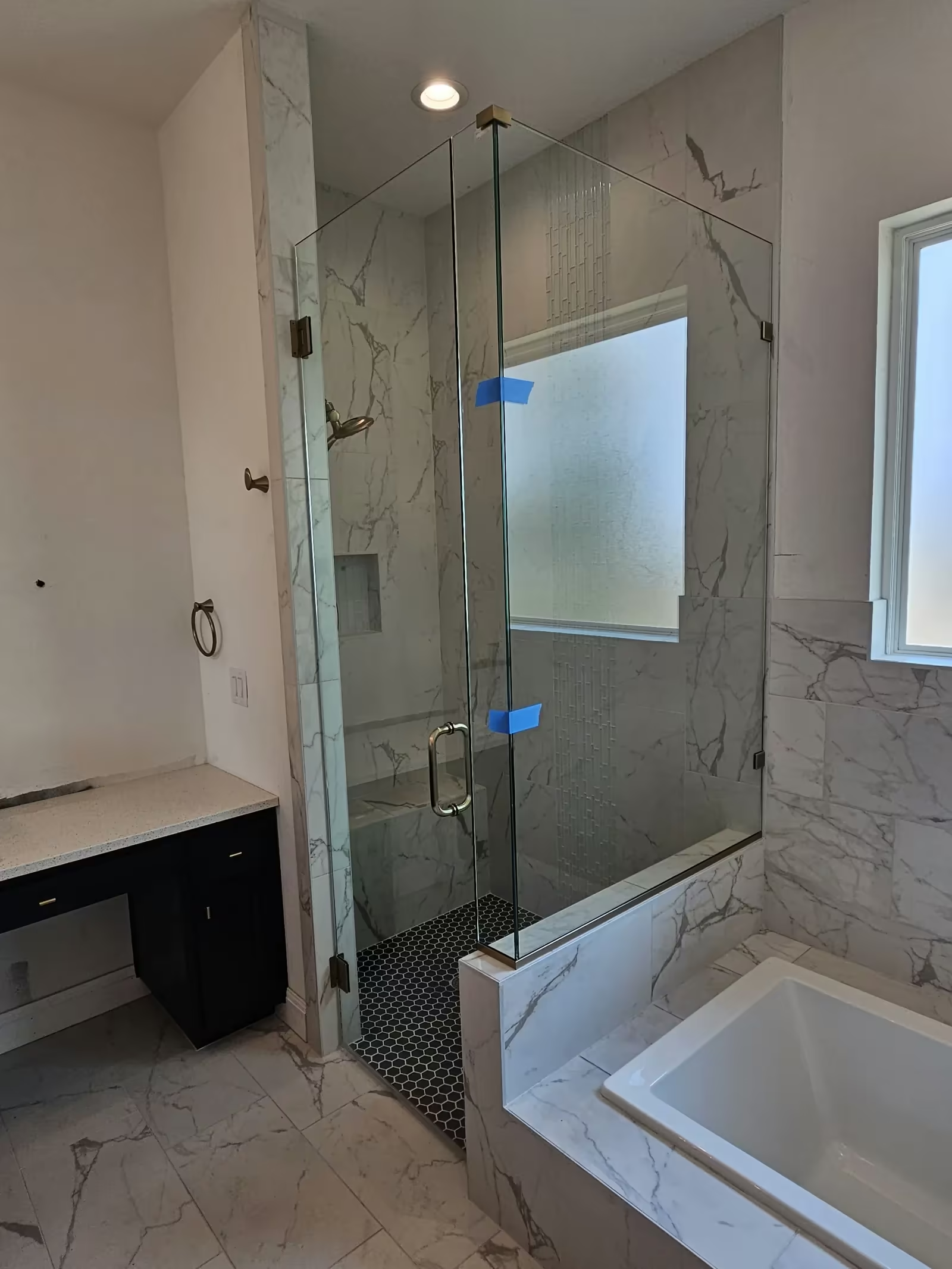
Choose frameless when the shower is a design feature — a tiled walk-in, a primary bath remodel, or a small room that needs to feel bigger. Thicker glass, almost no metal, and far less to clean.
Choose framed or semi-frameless when the budget matters more than the sightline, the opening is out of square, or it is a guest bath or tub surround that just needs to work well and look tidy.
Both use tempered safety glass, and both are custom cut to your opening. The real differences are glass thickness, how much metal you live with, and price.

Side by side
Framed vs. frameless, compared
| Framed | Frameless | |
|---|---|---|
| Typical installed cost | $900 – $1,600 for a standard tub or alcove enclosure | $2,200 – $4,500+ depending on opening size and hardware |
| Glass thickness | 3/16" tempered glass, supported by the metal frame | 3/8" or 1/2" tempered glass, self-supporting |
| Cleaning & maintenance | Metal track and bottom rail trap soap scum and hard-water film | Open glass with minimal hardware; a squeegee keeps it clear |
| Tolerance for out-of-square openings | Frame hides up to roughly 1/2" of variation in tile walls | Needs precise field measuring; glass is cut to your opening |
| Look in the room | Defined metal outline; reads as a separate fixture | Visually disappears and makes small bathrooms feel larger |
| Resale impact | Neutral — expected in secondary and guest baths | Frequently called out in primary-bath remodels and listings |
| Lead time | Often faster; fewer custom fabrication steps | Usually two to three weeks from measure to install |
Pricing reflects typical installed jobs in the Georgetown / Williamson County area and varies with opening size, glass texture and hardware finish.
What actually drives the price
- Glass thickness. 3/8" and 1/2" glass costs more to buy, temper, and carry up a staircase than the 3/16" glass used in framed doors.
- Hardware. Matte black and oil-rubbed bronze hinges and handles price above chrome and brushed nickel.
- Glass texture. Clear is the baseline; low-iron, rain, reeded and satin add cost — see our glass textures and finishes page.
- Opening geometry. Notches around benches, curbs, knee walls and steam headers add fabrication time.
- Wall condition. Out-of-plumb tile walls can push a job toward a semi-frameless solution, or toward custom-cut frameless glass.
Common questions
Framed vs. frameless: your questions
The questions homeowners ask us most often during a shower door measure.
Are frameless shower doors worth the extra cost?+
In a primary bathroom or a tiled walk-in shower, yes — thicker glass, cleaner sightlines and far less metal to scrub usually justify the difference. In a guest bath or over a standard tub, a well-built framed or semi-frameless door delivers most of the function for roughly half the price.
Do frameless shower doors leak?+
A properly measured frameless enclosure with the correct slope, sweeps and seals should not leak. Water escapes when the pan slopes the wrong way, the door swings inward over an open threshold, or the sweep is missing — all measuring and installation issues rather than a flaw in frameless glass.
Which is easier to clean, framed or frameless?+
Frameless. Framed doors have a bottom track and metal channels where soap scum, mildew and Central Texas hard-water minerals collect. Frameless glass has hinges and a header at most, so a squeegee after each shower keeps it clear.
Can I put a frameless door on an existing tub?+
Often yes. A frameless tub screen or fixed panel can be installed on many standard tubs, provided the deck is level and the wall studs can carry the hinge load. We confirm both during the free in-person measure.
What glass thickness is used for frameless shower doors?+
We use 3/8" tempered glass for most frameless enclosures and 1/2" for large or heavily used openings. Framed doors typically use 3/16" glass because the metal frame carries the load.
Free estimates
Not sure which one fits your bathroom?
We measure in person, show you both options against your tile, and quote each one so you can compare real numbers.
- Free in-person measure
- Our own install crew
- Most quotes back same day